
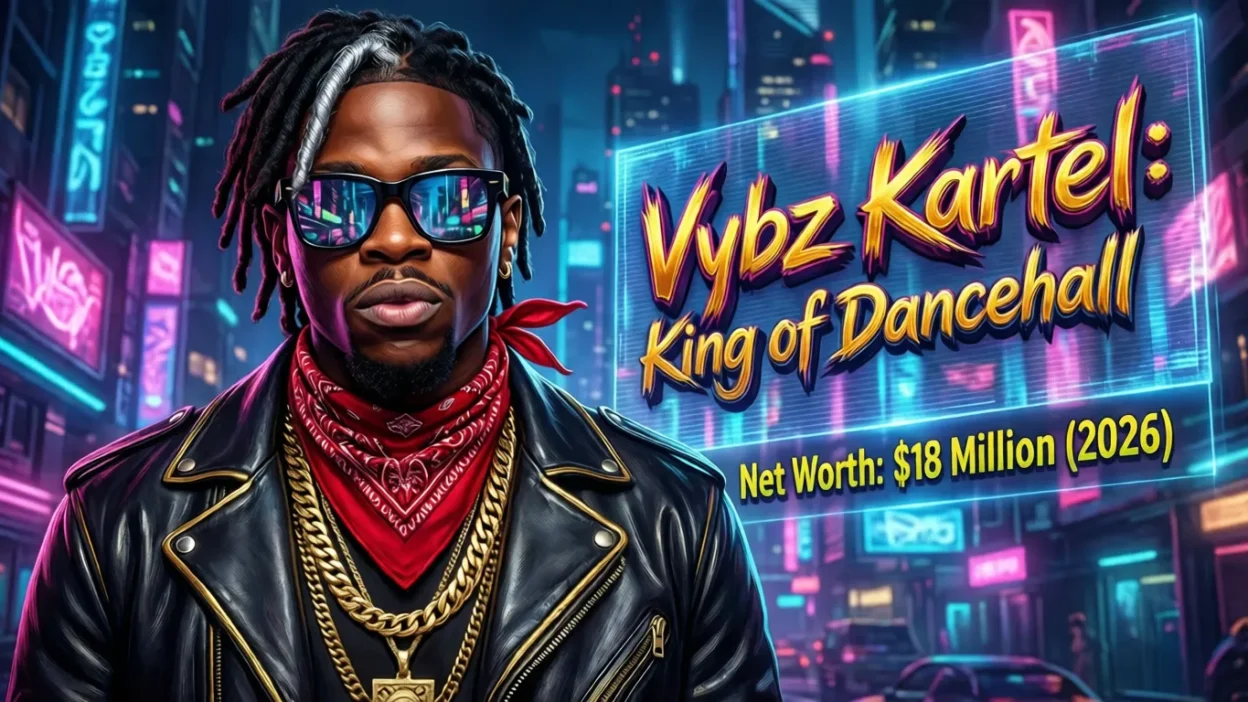
Vybz Kartel, born Adidja Palmer, is one of the most influential figures in dancehall music.
Known for his unique style, provocative lyrics, and chart-topping hits, he has shaped the sound of Jamaican music for over two decades.
Despite facing legal challenges, including a high-profile prison sentence, Kartel’s influence and popularity remain undeniable.
Fans across the globe continue to stream his music, making him one of the most commercially successful dancehall artists of his generation.
But beyond the fame and controversy lies an intriguing question: how much is Vybz Kartel really worth?
This article dives deep into his career earnings, business ventures, and sources of income, offering a comprehensive look at his net worth.
From luxurious lifestyles to royalties earned behind bars, we explore all aspects of Kartel’s financial world and his lasting impact on the music industry.
Early Life and Background
Adidja Palmer, popularly known as Vybz Kartel, was born on January 7, 1976, in Kingston, Jamaica. Growing up in a vibrant yet challenging environment, he was exposed to music from an early age. His love for performing began during childhood, influenced by the rich culture of Jamaican dancehall and reggae. Kartel attended Kingston College, where his talent for music and lyrical creativity started to shine. Even as a teenager, he was known for his sharp wit and ability to captivate audiences with his freestyle performances.
Before rising to international fame, Kartel experimented with various musical styles, blending traditional dancehall rhythms with contemporary sounds. His early experiences in the local music scene helped him understand the industry’s dynamics and develop a distinctive style that would later define his career. Despite personal and financial challenges during his youth, Kartel’s determination and passion for music kept him focused on his dreams. This early foundation laid the groundwork for his breakthrough in the early 2000s, setting him on a path to becoming one of dancehall’s most iconic and influential figures.
Career Overview
Vybz Kartel’s career in dancehall music officially took off in the early 2000s, quickly establishing him as one of Jamaica’s most dynamic and controversial artists. Known for his clever wordplay, raw lyrics, and charismatic stage presence, Kartel released hit after hit, dominating the local music scene. Songs like Clarks, Romping Shop, and Fever not only topped charts in Jamaica but also gained international recognition, cementing his status as a global dancehall icon.
Over the years, Kartel has released numerous albums and mixtapes, including Pon Di Gaza, Worl’ Boss, and King of the Dancehall, showcasing his versatility and ability to evolve with changing musical trends. His collaborations with international artists, such as Sean Paul and Major Lazer, further expanded his reach, exposing dancehall to a wider audience.
Despite legal challenges that have kept him incarcerated since 2011, Kartel’s influence in the music industry remains strong. He continues to release new music, and his songs still perform well on streaming platforms, demonstrating the lasting appeal of his artistry. Through his prolific output and unwavering presence, Vybz Kartel has become more than a musician—he is a cultural phenomenon, shaping the sound and style of modern dancehall.
Sources of Income
Vybz Kartel’s wealth comes from multiple streams, reflecting both his musical success and entrepreneurial ventures. At the core of his earnings is his music. Album sales, digital downloads, and streaming revenue from platforms like Spotify and Apple Music continue to generate substantial income, even while he is incarcerated. His prolific output ensures a steady flow of royalties from songs that remain popular worldwide.
Live performances and tours have also been significant income sources. Before his imprisonment, Kartel commanded high fees for concerts and international tours, performing in countries across the Caribbean, North America, and Europe. These appearances solidified his reputation as a global dancehall star.
Beyond music, Kartel has ventured into business. He has been involved in merchandise sales, including clothing lines and branded products, which contribute to his earnings. There are also reports of investments in real estate, with properties in Jamaica adding to his net worth.
Even behind bars, Kartel continues to make money through music releases, collaborations, and royalties, demonstrating the enduring power of his brand. His diverse income streams have enabled him to maintain a lavish lifestyle and remain financially influential, despite the challenges posed by his legal situation.
Vybz Kartel’s Net Worth
Vybz Kartel’s net worth is estimated to be around $10–12 million USD, making him one of the richest and most successful dancehall artists of his generation. His wealth reflects decades of dominance in the music industry, combined with smart business moves and consistent royalty earnings. While exact figures are difficult to verify, his extensive catalog of hits, ongoing streaming revenue, and entrepreneurial ventures contribute significantly to his financial standing.
Compared to other dancehall stars, Kartel ranks among the top earners. Artists like Sean Paul and Beenie Man may have higher international exposure, but Kartel’s influence on the genre and loyal fan base ensure that his earnings remain substantial. His ability to generate income from music released even while incarcerated is a testament to his enduring brand and appeal.
Additionally, Kartel’s investments in real estate and merchandise sales provide alternative revenue streams, adding stability to his net worth. Despite legal challenges and limited public appearances, his financial influence shows that a strong brand and prolific creative output can maintain wealth over time. In the world of dancehall, Vybz Kartel is not just a musical icon but also a financially savvy figure whose net worth reflects both talent and business acumen.
Controversies and Legal Issues
Vybz Kartel’s career has been marked not only by success but also by high-profile controversies and legal challenges. In 2011, he was arrested and later convicted for the murder of Clive “Lizard” Williams, a case that drew international attention and deeply affected his public image. He is currently serving a life sentence in a Jamaican prison, a situation that would have ended the career of many artists.
Despite incarceration, Kartel has maintained a strong presence in the music industry. He continues to release music through his team, and his songs generate substantial royalties, showing that his brand remains highly profitable. However, his legal issues have impacted live performances, international tours, and certain business opportunities, limiting some traditional income streams.
Kartel has also faced controversies over explicit lyrics and public feuds with other artists. His provocative style and willingness to address taboo topics in his music have fueled both criticism and admiration. These controversies, while polarizing, have kept him relevant in the public eye, reinforcing his image as the “Worl’ Boss” of dancehall.
Ultimately, Kartel’s legal battles and controversies have shaped his career and net worth, demonstrating that even in adversity, a strong personal brand and loyal fan base can sustain influence and financial success.
Lifestyle
Vybz Kartel is known not just for his music but also for his extravagant lifestyle, which reflects his success and influence in the dancehall world. Over the years, he has invested in luxury cars, high-end fashion, and lavish properties in Jamaica, demonstrating a taste for the finer things in life. His homes are reported to feature modern amenities and stylish designs, symbolizing his financial success and status as a cultural icon.
Fashion has always been a major part of Kartel’s persona. From bold streetwear to designer labels, his style sets trends in dancehall culture. Fans often emulate his looks, solidifying his influence beyond music. Merchandise sales, including branded clothing lines, also contribute to his financial portfolio, blending personal branding with business acumen.
Even during incarceration, Kartel maintains a luxurious lifestyle indirectly through royalties, business ventures, and loyal management of his brand. His influence extends online, with fans and followers engaging with his releases, interviews, and social media updates, keeping him culturally relevant.
Overall, Kartel’s lifestyle showcases a balance between success, creativity, and strategic financial management. It reflects how an artist can maintain status, wealth, and influence despite personal and legal challenges, making him a standout figure in dancehall history.
How He Makes Money From Prison
Even behind bars, Vybz Kartel has managed to maintain a steady income, a feat few artists achieve under similar circumstances. One of his primary revenue sources is music royalties.
Despite being incarcerated since 2011, Kartel continues to release new songs through his management team, producers, and collaborators. These tracks are streamed on platforms like Spotify, Apple Music, and YouTube, generating substantial revenue from both streams and digital sales.
Kartel also earns from ongoing rights to his older catalog. Classic hits like Fever, Clarks, and Romping Shop continue to attract new listeners worldwide, ensuring a consistent flow of royalties. Merchandise sales, including branded clothing and promotional items, also contribute to his earnings, capitalizing on his strong fan base.
Collaborations and features arranged remotely allow Kartel to stay connected with the music industry, further enhancing his income. Social media presence and online fan engagement indirectly support his brand, increasing visibility and driving sales.
This ability to generate revenue from prison highlights the power of a strong brand and loyal fan base. Kartel’s financial resilience demonstrates that with strategic management, an artist can remain profitable and culturally influential, even when facing severe personal and legal challenges.
Conclusion
Vybz Kartel’s journey from Kingston’s streets to becoming one of the most influential dancehall artists in the world is nothing short of remarkable. Despite legal battles and incarceration, he has maintained a thriving career, a loyal fan base, and a substantial net worth estimated at $10–12 million USD.
His success is fueled not only by hit songs and albums but also by smart business ventures, merchandise, and ongoing royalties, proving the power of a strong personal brand.
Kartel’s lifestyle, musical influence, and entrepreneurial spirit highlight how talent, determination, and strategic management can sustain both cultural and financial relevance even under challenging circumstances.
While controversies and legal issues have shaped public perception, they have not diminished his impact on dancehall music, nor his position as a trendsetter and innovator.
Ultimately, Vybz Kartel is more than just a musician; he is a cultural phenomenon whose legacy extends beyond music into fashion, business, and global influence.
His net worth and enduring popularity stand as a testament to his creativity, resilience, and lasting imprint on the world of dancehall.